

Chiller for Plastic Extrusion

Chiller for Plastic Extrusion Industry – Complete Guide to Efficient Cooling in Extrusion Processes
The plastic extrusion industry is one of the most important segments of modern manufacturing. From PVC pipes and HDPE pipes to plastic sheets, films, profiles, cables, and packaging materials, extrusion technology is widely used across multiple industries including construction, packaging, automotive, and infrastructure.
Plastic extrusion machines operate continuously to produce long and uniform plastic products. However, one factor that directly affects product quality, production speed, and machine performance is temperature control during the extrusion process.
Many manufacturers focus mainly on extruders, dies, and raw materials, but often overlook one crucial element — efficient cooling. Without proper cooling, extruded plastic may lose its shape, surface finish may degrade, and production efficiency can drop significantly.
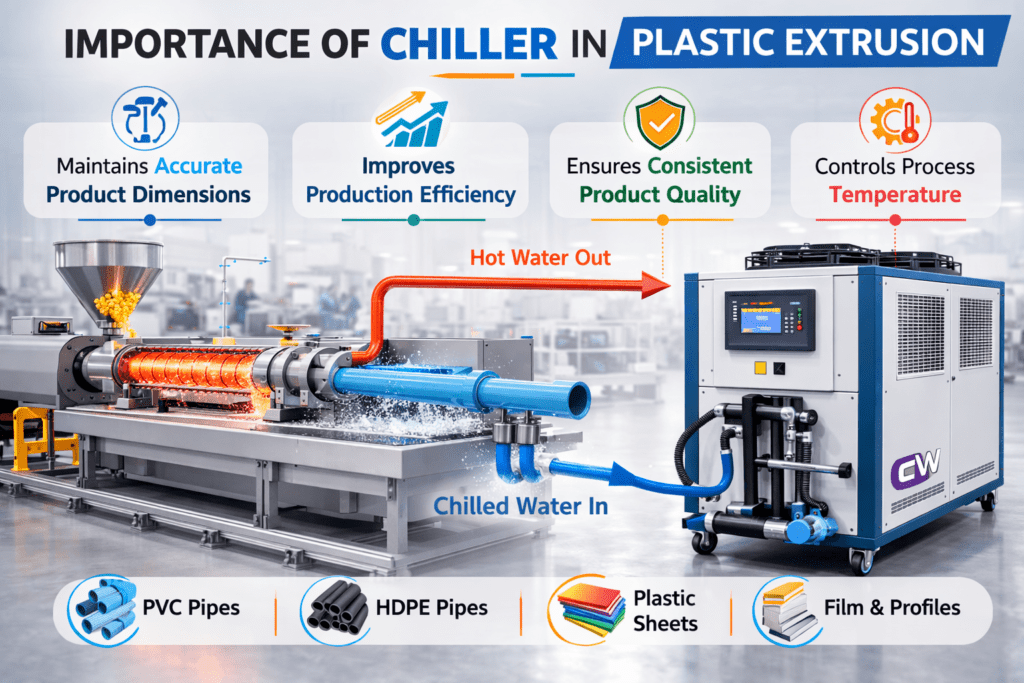
This is where a chiller for plastic extrusion becomes an essential part of the manufacturing process.
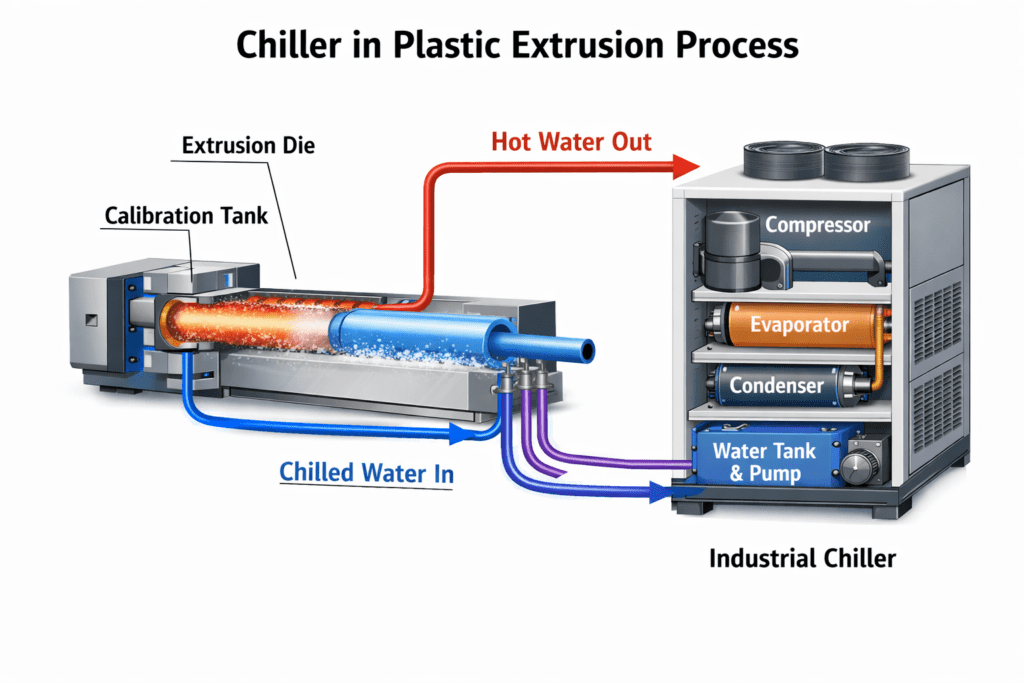
Industrial chillers provide precise temperature control for extrusion dies, calibration tanks, and downstream cooling systems, ensuring consistent product dimensions and faster production cycles. In modern extrusion plants, a reliable chiller system is not just an optional accessory; it is a critical component of the production line.
In this guide, we will explore how chillers work in the plastic extrusion industry, why they are important, the types of chillers used, and how to choose the right chiller for your extrusion plant.
Understanding the Plastic Extrusion Cooling Process
To understand the importance of a chiller, it is necessary to first understand how plastic extrusion works.
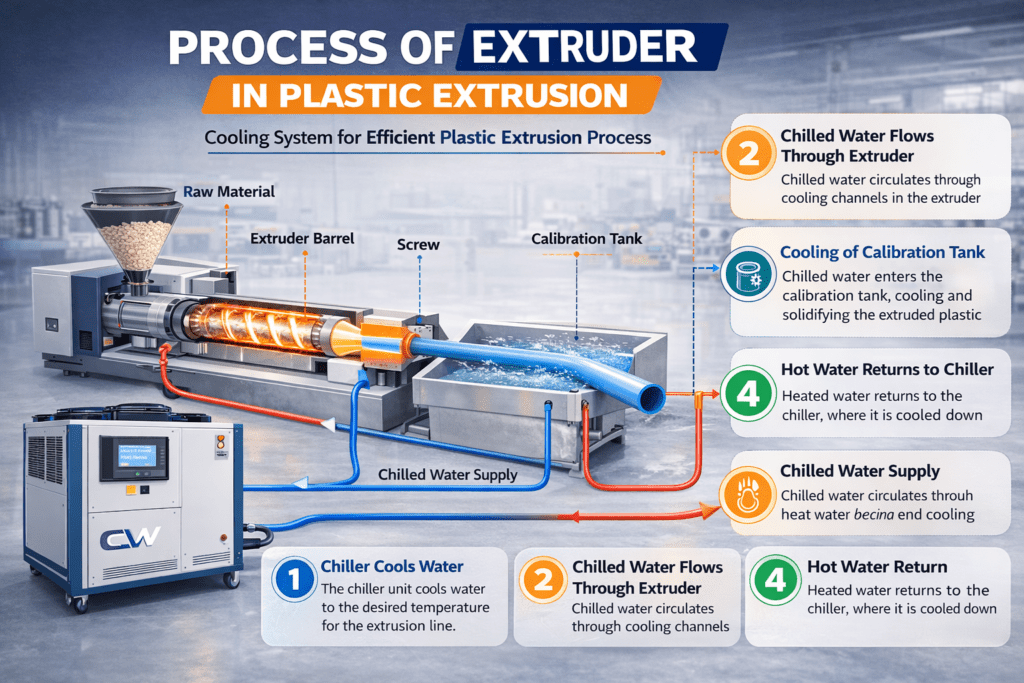
Plastic extrusion is a continuous manufacturing process where raw plastic material is melted, shaped through a die, and cooled to maintain its final shape.
The extrusion process generally involves the following stages:
- Plastic melting inside the extruder barrel
- Plastic shaping through the extrusion die
- Cooling and solidification
- Cutting or winding of finished products
Among these stages, cooling and temperature stabilization play a critical role in determining the final quality of the product.
Once molten plastic exits the die, it must be cooled quickly and uniformly to maintain its dimensional accuracy. If the cooling process is unstable, several problems can occur:
✖ Deformation of extruded products
✖ Uneven wall thickness
✖ Surface roughness
✖ Reduced production speed
✖ Inconsistent product quality
These problems not only affect product quality but also increase production costs and machine downtime.
✖ Reduced production efficiency
Why Chillers Are Important for Plastic Extrusion
Many small extrusion plants initially depend on cooling towers, groundwater, or ambient water systems. While these methods may provide basic cooling, they cannot maintain the precise temperature control required for modern extrusion processes.
An industrial chiller provides several important advantages.
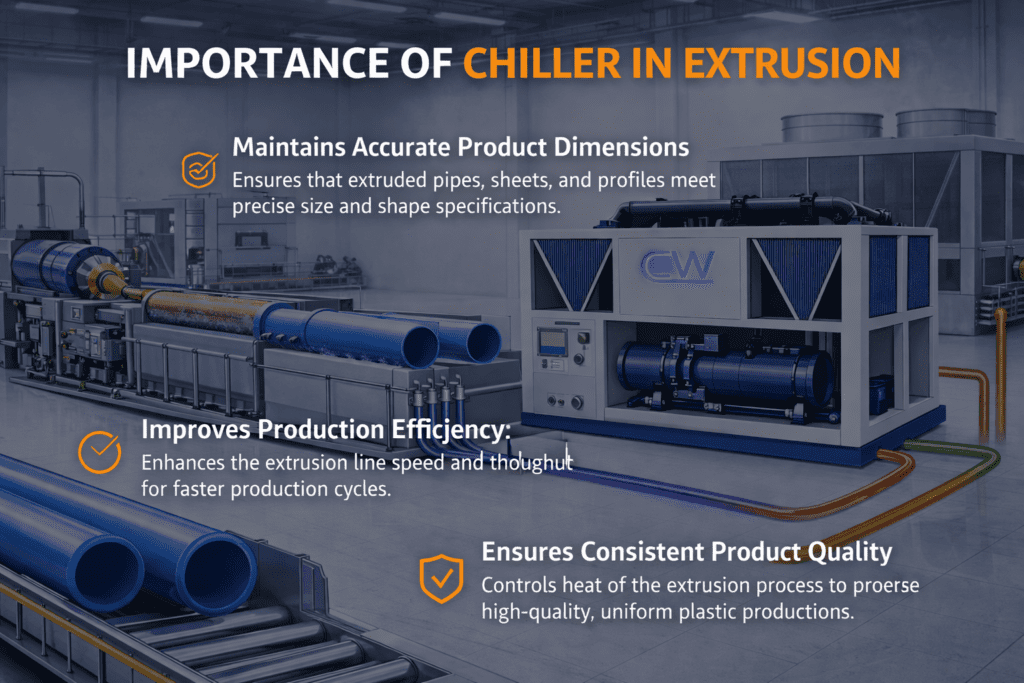
1. Faster Production Speed
In extrusion manufacturing, faster cooling allows the product to stabilize quickly after leaving the die.
A chiller supplies consistent chilled water to calibration tanks and cooling baths, allowing the plastic product to solidify faster. This helps increase line speed and production capacity.
2. Improved Product Quality
Precise temperature control ensures uniform cooling throughout the extruded product.
This helps maintain
• Accurate product dimensions
• Smooth surface finish
• Consistent wall thickness
• Better structural strength
Industries such as construction pipes, medical tubing, and electrical cable insulation require strict quality standards that depend heavily on stable cooling systems.
3. Protection of Extrusion Machinery
Extrusion machines operate at high temperatures and continuous loads.
Without proper cooling, excessive heat can damage critical components such as:
• Extruder gearbox
• Hydraulic systems
• Die heads
• Calibration units
A chiller protects these components by maintaining stable operating temperatures, extending machine life and reducing maintenance costs.
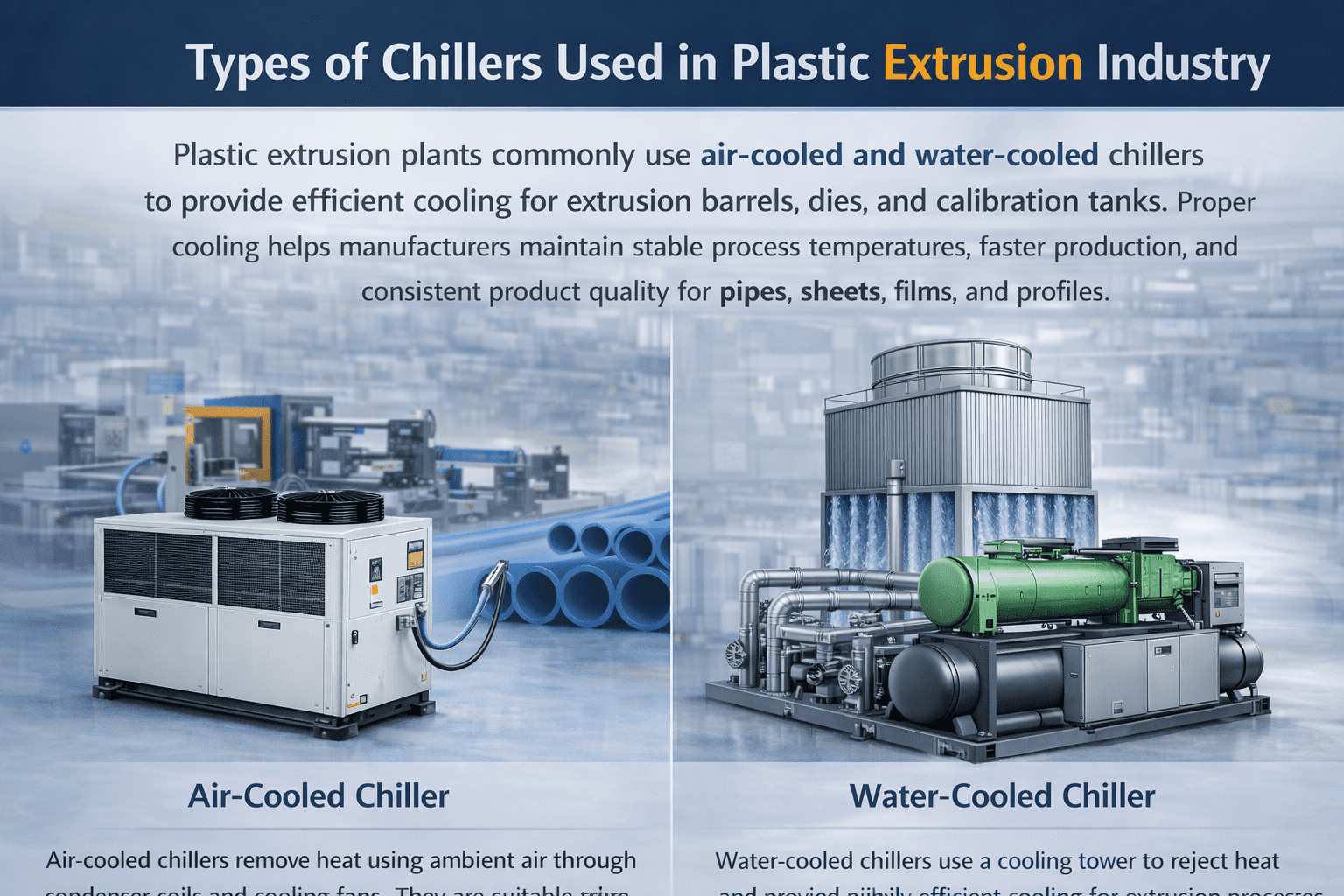
Types of Chillers Used in Plastic Extrusion Industry
Air-cooled and water-cooled industrial chillers are widely used in plastic extrusion plants to provide efficient cooling for extrusion barrels, dies, and calibration tanks. Proper cooling helps manufacturers maintain stable process temperatures, faster production, and consistent product quality for pipes, sheets, films, and profiles.
Air Cooled Chiller
Air-cooled chillers remove heat using ambient air through condenser coils and cooling fans. They are suitable for plastic extrusion plants where easy installation, lower maintenance, and minimal water usage are required.
Water-Cooled Chiller
Water-cooled chillers use a cooling tower to reject heat and provide highly efficient cooling for extrusion processes. They are commonly used in large extrusion plants that require continuous production, stable temperature control, and higher cooling capacity.
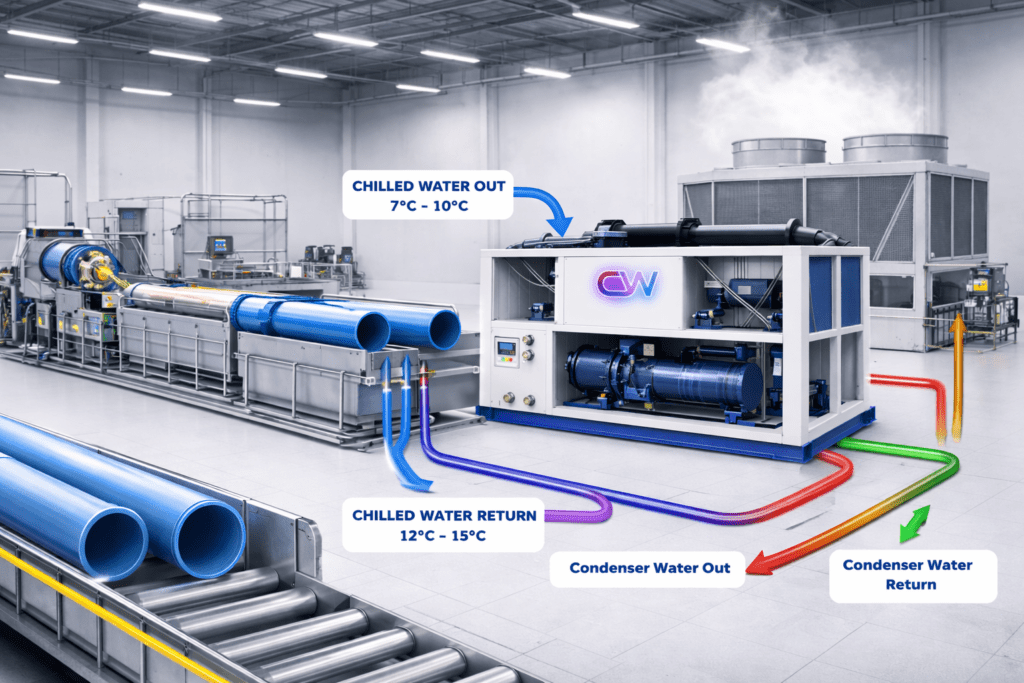
Process of Plastic Extrusion Cooling using a Water-Cooled Chiller
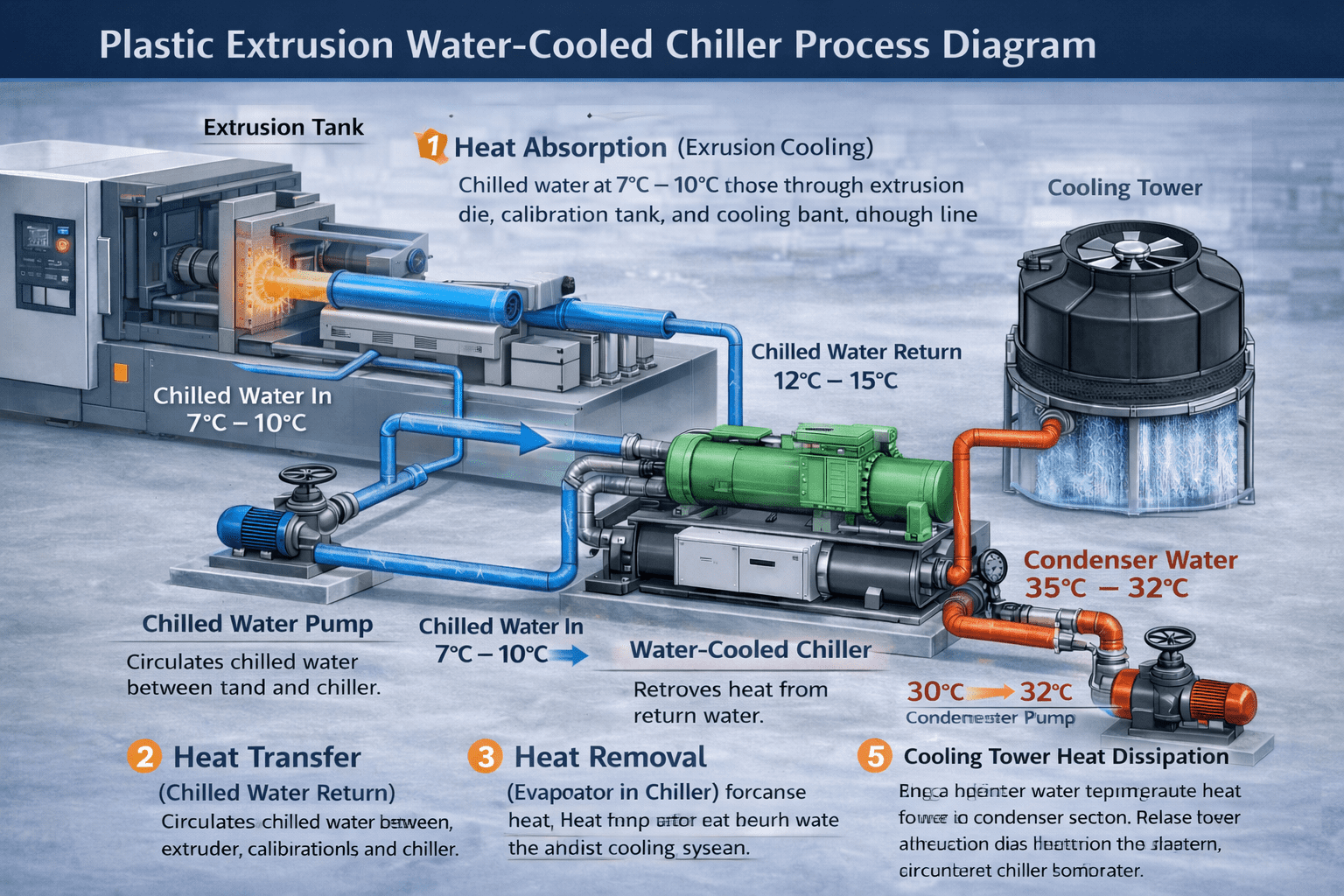
Step-by-Step Working Process
Heat Absorption (Extrusion Cooling)
Chilled water at 7°C – 10°C circulates through the extrusion die, calibration tank, and cooling bath. This chilled water absorbs heat from the molten plastic as it exits the extruder, allowing the material to cool, solidify, and maintain its correct shape.
Heat Transfer (Chilled Water Return)
After absorbing heat from the extrusion process, the water temperature increases to 12°C – 15°C and returns to the water-cooled chiller through the chilled water return pipeline.
Heat Removal (Evaporator in Chiller)
Inside the evaporator, the refrigerant absorbs heat from the warm return water. This process cools the water again to 7°C – 10°C, preparing it to circulate back to the extrusion cooling system.
Heat Rejection (Condenser Section)
The refrigerant carrying absorbed heat moves to the condenser, where the heat is transferred to the condenser water circulating through the system.
Cooling Tower Heat Dissipation
The heated condenser water flows to the cooling tower, where the heat is released into the atmosphere. The cooled water then returns to the chiller condenser to continue the cycle.
Continuous Cooling Cycle
This continuous circulation of chilled water, refrigerant, and condenser water maintains stable cooling for the extrusion process, ensuring consistent product dimensions, smooth surface finish, and efficient production of pipes, sheets, films, and profiles.
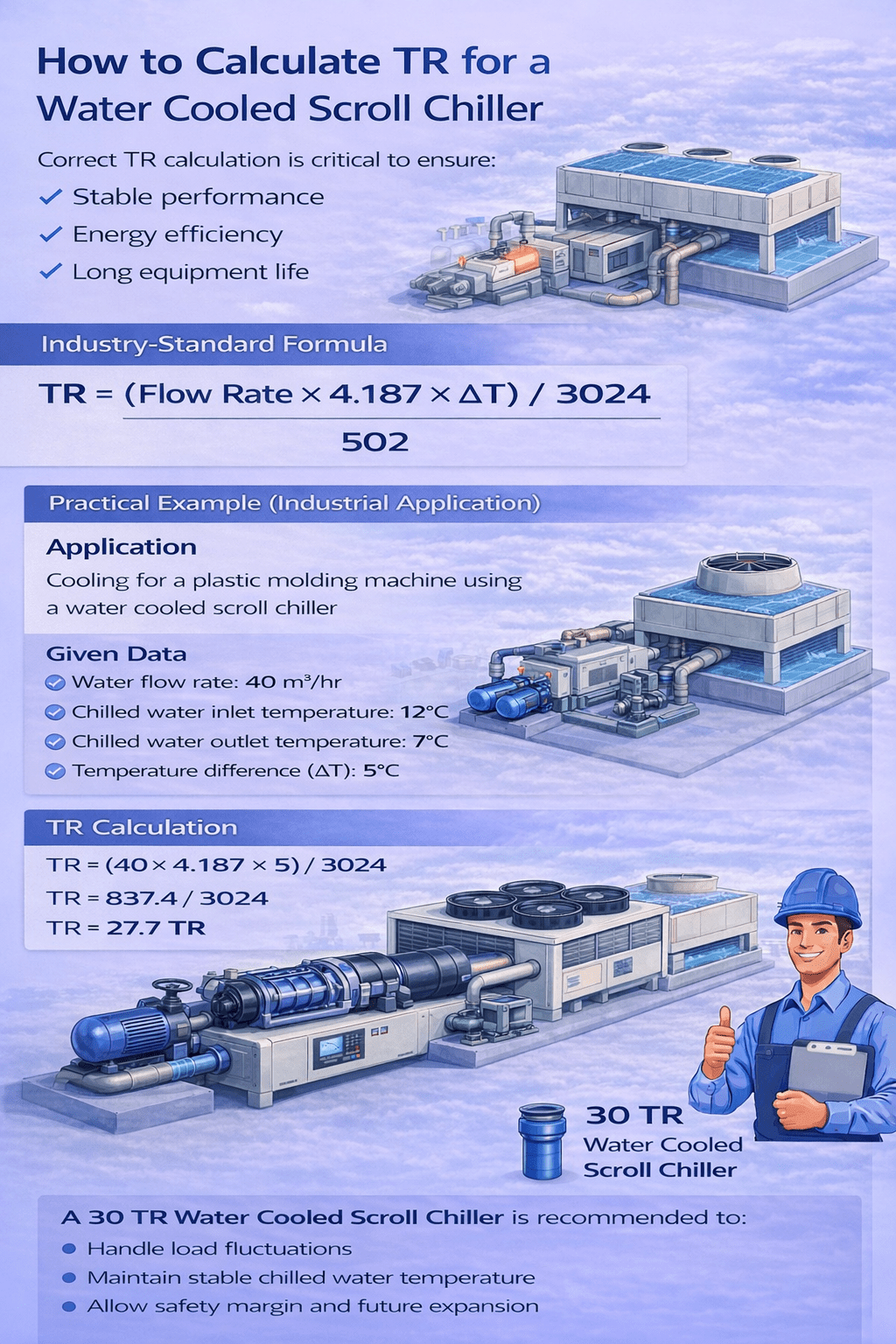
How to Calculate Water Cooled Scroll Chiller Capacity in TR (With Example)
Standard TR Formula (Water Cooled Chiller)
TR=3024Flow Rate×4.187×ΔT Where:
Flow Rate = Chilled water flow in m³/hr
ΔT = Temperature difference between inlet & outlet water (°C)
4.187 = Specific heat of water
3024 = Conversion constant
Practical Example (Industrial Application)
Application:
Cooling for a plastic molding machine using a water cooled scroll chiller
Given Data:
Water flow rate = 40 m³/hr
Chilled water inlet temperature = 12°C
Chilled water outlet temperature = 7°C
Temperature difference (ΔT) = 5°C
TR Calculation
TR=302440×4.187×5 TR=3024837.4 TR ≈ 27.7 TR
Recommended Chiller Selection
A 30 TR Water Cooled Scroll Chiller is recommended to:
Handle load fluctuations
Maintain stable chilled water temperature
Allow safety margin and future expansion
Request For Free Consultation
Request a Free Consultation from a Leading Chiller Manufacturer
“Get technical consultation from a certified chiller manufacturer and supplier.
We help you select the right chiller system for maximum efficiency and precise temperature control.“
Key Components & Applications
Key Components of a Water Cooled Scroll Chiller
A well-designed water cooled scroll chiller consists of the following major components:
Scroll Compressors
Multiple scroll compressors are often used for:
Better part-load efficiency
Redundancy and reliability
Smooth capacity control
Shell & Tube Evaporator
Ensures efficient heat transfer and easy maintenance.
Shell & Tube Condenser
Transfers heat to condenser water with high efficiency.
Expansion Valve
Maintains precise refrigerant flow.
Control Panel
Microprocessor-based controls for temperature accuracy, safety, and energy optimization.
Typical Applications of Water Cooled Scroll Chillers
Water cooled scroll chillers are widely used in industries where stable and efficient cooling is critical.
Plastic & Injection Molding Industry
Maintains consistent mold and oil temperature, improving product quality.
Pharmaceutical & Chemical Plants
Provides precise temperature control for sensitive processes.
Food & Beverage Industry
Used in breweries, dairies, and processing plants.
HVAC Systems
Ideal for hospitals, hotels, malls, and office buildings.
Rubber, Printing & Lamination Plants
Ensures smooth operation of machinery and consistent output.